
Easton Club HOA Homes: A Buyer’s Guide to Living Here
June 4, 2026
June 4, 2026
Wondering whether HOA living in Easton Club will make your life easier or feel too restrictive? That is a common question, especially if you want a home near downtown Easton but also want to understand the day-to-day costs, rules, and benefits before you buy. If you are comparing Easton Club with other Easton neighborhoods, this guide will help you understand what the HOA does, what owners typically pay for, and what to review before making an offer. Let’s dive in.
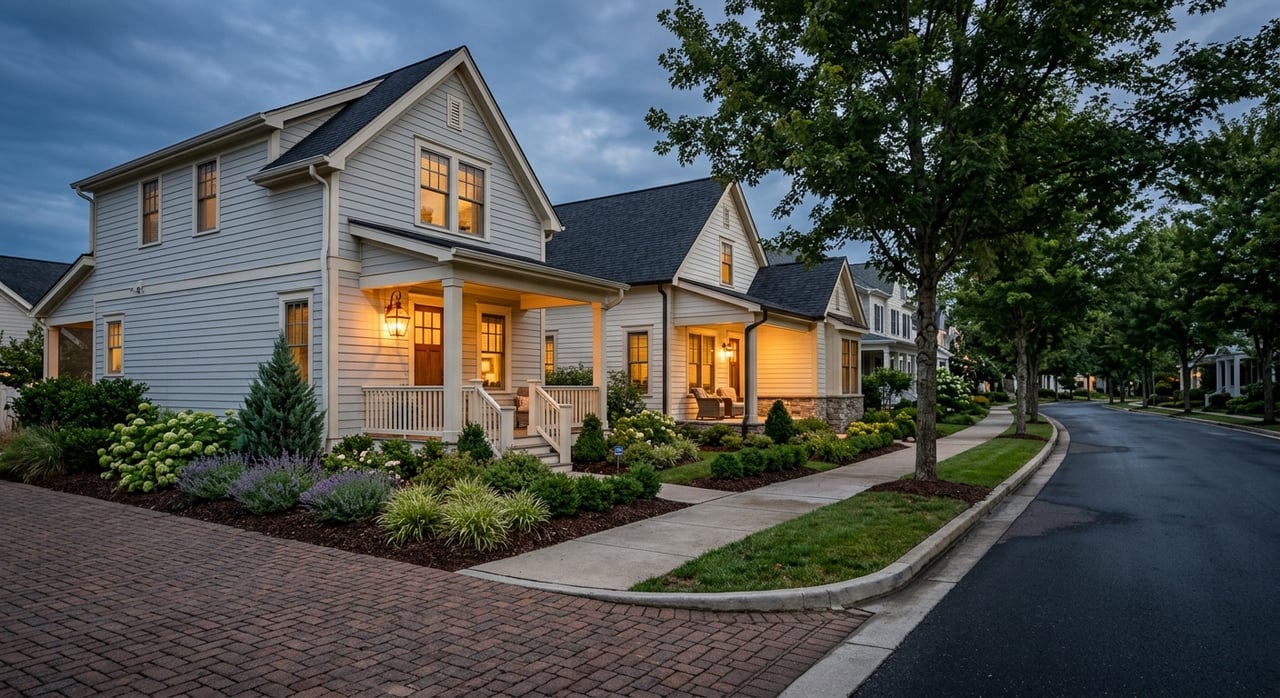
Easton Club is a planned HOA community in Easton, Maryland 21601. According to the community’s official site, it includes 342 single-family homes and townhouses in a rural setting near the Tred Avon River and just minutes from downtown Easton.
That location gives you a blend of neighborhood structure and convenient access to town services, shopping, dining, and everyday errands. Easton is the county seat of Talbot County, and the community site also notes that the area is about a 75-minute drive from Baltimore, Annapolis, Washington, DC, and Maryland beach destinations.
It is also important to know that Easton Club is not the same community as Easton Club East. The two neighborhoods are separate, and that distinction matters when you are reviewing listings, HOA fees, documents, and amenities.
The Easton Club association exists to maintain common property and enforce the community’s bylaws, covenants, deed restrictions, and policies. In practical terms, that means the HOA helps manage shared spaces and sets rules that support a more consistent neighborhood appearance and maintenance standard.
The community’s official site lists VN Management, Inc. as the administrative office and Meghan Aldrich as the community association manager. For buyers, that is useful because management contact information is one of the details you should expect to confirm in the resale disclosure process.
One of the biggest reasons buyers consider HOA living is access to shared amenities. Easton Club’s public amenities include:
The pool is open to homeowners, tenants, and guests. The community site says it uses salt-water chlorination and has a certified lifeguard while open.
The tennis court is open on a first-come, first-use basis from dawn to dusk. If you value having recreational features close to home without handling the upkeep yourself, this can be a meaningful advantage.
For most buyers, the next question is simple: what does it cost?
The public association-fees page does not show current fee details without login access, so recent listing data offers the best public snapshot. Recent Easton Club listings show HOA charges of about $410 to $430 per quarter, which works out to roughly $136 to $144 per month.
Listings commonly show these fees covering items such as:
That said, you should always confirm the exact fee and inclusions for the specific property you are considering. The amount and services may vary by lot, section, or home type.
A common misunderstanding is assuming HOA dues cover all property-related services. In Easton Club, that does not appear to be the case.
The community points residents to Easton Utilities for gas, electric, water, and internet, TV, and phone services. It also points residents to Easton Public Works for trash, recycling, and bulk trash, which means those costs should be budgeted separately unless your resale documents state otherwise.
Easton Club may appeal to you if you want a more predictable maintenance structure and shared amenities. Many buyers like the convenience of having lawn care and snow removal handled through the association rather than coordinating those services on their own.
The tradeoff is that HOA living usually means less flexibility with certain property decisions. Easton Club’s governing-documents page states that, unless exempted, exterior additions or modifications require Architectural Committee approval.
That can affect projects like landscaping changes, fencing, exterior improvements, or other visible alterations. If you want broad freedom to change the outside of your property without review, a non-HOA neighborhood may be a better fit.
If you are buying in Easton Club, Maryland law gives you important disclosure rights. Under Maryland’s Homeowners Association Act, a seller must provide HOA disclosures on or before contract, or within 20 calendar days after contract.
The law also gives buyers limited cancellation rights in certain situations, including if the disclosure packet arrives late or if mandatory fees increase by more than 10 percent. That makes the disclosure package more than just paperwork. It is a key part of your due diligence.
The required package includes information such as:
Before you move forward, take time to review those materials carefully. They can tell you a lot about both the financial health of the association and the practical rules you will live with after closing.
HOA fees do not just cover day-to-day upkeep. They also support reserves and future capital expenses, which is why the budget matters.
Maryland law requires an annual proposed budget, adoption at an open meeting, and an annual review of reserves and the most recent reserve study. For a buyer, that means you have a framework for reviewing how the association plans for both current costs and longer-term maintenance needs.
A well-documented budget and reserve process can help you better understand whether the community is planning ahead for major expenses. It can also help you spot questions worth asking before you commit.
When you are considering a home in Easton Club, it helps to go beyond the listing sheet. A few focused questions can give you a much clearer picture of ownership costs and expectations.
Here are some of the most important ones to ask:
These questions are especially important in an HOA community because the answers can affect your monthly budget, future plans for the property, and overall ownership experience.
Easton Club often makes sense for buyers who want a neighborhood with shared amenities, organized upkeep, and a location close to downtown Easton. If low-maintenance living is high on your list, the combination of lawn care, snow removal, and common-area management may be a strong plus.
It may also appeal if you are buying from out of town or looking for a second home on the Eastern Shore. Having a more structured maintenance setup can make ownership feel more manageable when you are not local full-time.
On the other hand, if your top priority is maximum control over exterior changes and property use, you may want to compare Easton Club with non-HOA options in the Easton area. The right fit depends on how you balance convenience, amenities, cost, and flexibility.
HOA living in Easton Club is really about tradeoffs. You gain shared amenities, a more predictable maintenance structure, and neighborhood oversight, but you also agree to follow community rules and budget for dues in addition to your regular utility and municipal service costs.
If you are thinking about buying in Easton Club, the smartest next step is to review the specific property’s resale package and compare the community’s structure with your own priorities. If you want clear, local guidance as you weigh Easton Club against other Easton-area neighborhoods, Eddie Matthews can help you sort through the details with a steady, practical approach.




Whether you’re buying your first home, selling a trust property, or navigating a probate sale, my goal is always the same: to provide honest guidance, strong advocacy, and a smooth experience from beginning to end. Real estate is about people, not just properties. I would be honored to help you take your next step.