
Buying a Home in Cooke’s Hope: A Smarter Way to Prepare
June 11, 2026
June 11, 2026
Buying in Cooke’s Hope can feel simple at first glance, then quickly turn more layered once you look closer. Inventory is limited, the community includes different home types and lot sizes, and Maryland’s contract and HOA rules can shape your timeline as much as the home itself. If you want to make a confident move in this Easton community, it helps to know what to compare, what to review early, and where the process can slow down. Let’s dive in.
Cooke’s Hope is an HOA community in Easton with more than 475 acres and three distinct neighborhoods: The Village, The Galloways, and Springfield. That mix matters because each area offers a different feel, lot pattern, and housing type.
The community also includes shared amenities highlighted by the HOA, including a community room, central post office, little library, fitness center, tennis and pickleball courts, walking trails, and a remodeled dock for small boats and kayaks. For many buyers, that combination adds value beyond the house itself.
The location is another draw. The HOA notes that Cooke’s Hope sits within a short 10-mile radius of St. Michaels and Oxford, which can be useful if you are comparing access to waterfront towns, weekend plans, or a broader Eastern Shore lifestyle.
One of the biggest mistakes you can make is treating Cooke’s Hope like one uniform neighborhood. Based on the HOA’s neighborhood structure and the range of current inventory and resale activity, buyers should compare sub-areas carefully instead of assuming every listing offers the same experience.
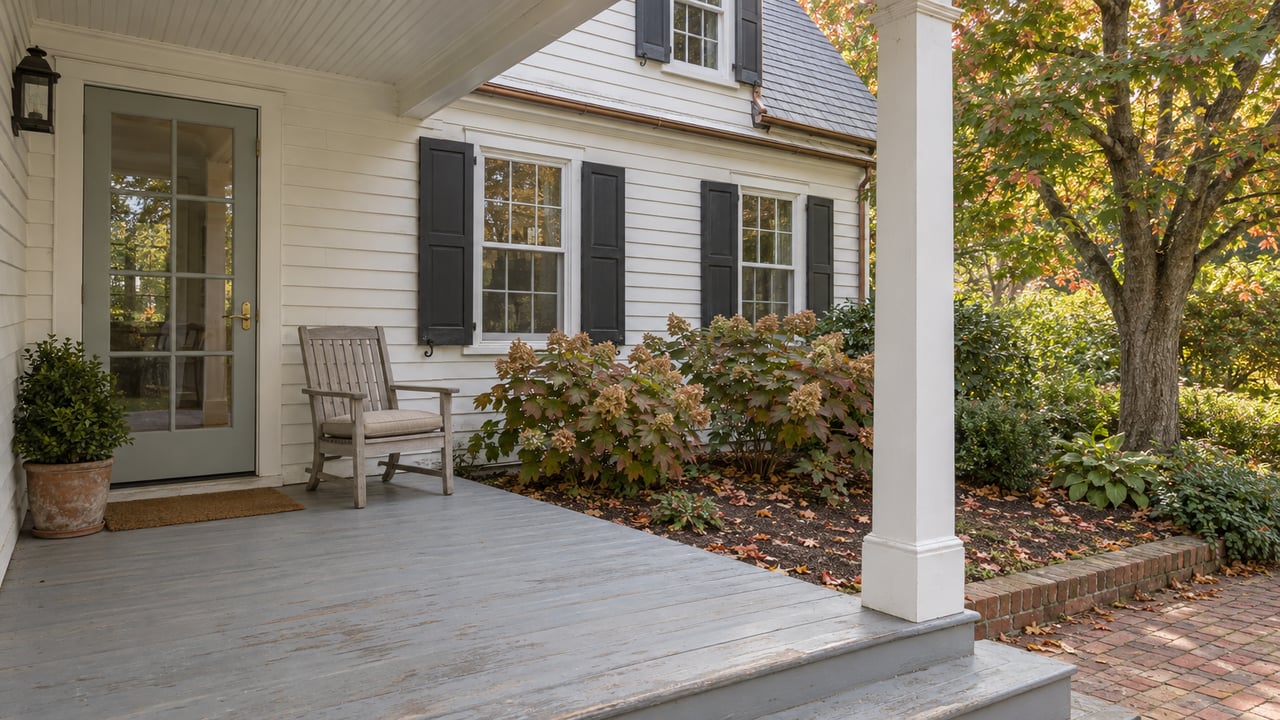
The Village is known for brick-paved sidewalks and front porches. If you like a more traditional neighborhood layout with homes closer together and a strong streetscape, this section may be the one you focus on first.
A recent Village resale sold in August 2024 for $1.2 million. That helps show how pricing in Cooke’s Hope can vary depending on home style, lot, and location within the community.
The Galloways consist of brick townhomes. If you want Cooke’s Hope amenities and location but prefer a different maintenance profile or footprint than a detached home, this section may deserve a closer look.
Springfield offers larger homes on 2 to 5 acre lots, and many are along Peachblossom Creek. If privacy, land, or creek proximity are high on your list, this part of the community may stand apart from the others.
That said, larger lots and water adjacency can also mean more due diligence. In Springfield especially, you will want to pay close attention to drainage, creek proximity, and any flood-zone or critical-area language in the disclosure package.
Publicly visible inventory in Cooke’s Hope is thin. Current examples noted in the research include just a small number of active listings and one available new-construction home at 7015 Cheston Way priced at $774,990, with 3 bedrooms, 2.5 bathrooms, and 2,329 square feet.
When supply is that tight, the right home may not sit long once it appears. At the same time, broader Easton market data shows a somewhat competitive market rather than an automatic bidding-war environment, with a median sale price of $412,287 over the last three months ending April 2026, average days on market of 104, a 97.6% sale-to-list ratio, and 23.5% of homes selling above list price.
The practical takeaway is simple: you should be ready to act, but not rushed into skipping important steps. In Cooke’s Hope, a smart offer is usually one that balances timing with solid review of the property and the paperwork.
Cooke’s Hope offers a distinct Eastern Shore setting, but daily logistics still matter. The area is considered car-dependent, with a Walk Score of 0 and a Bike Score of 22, so you should expect most errands and day-to-day trips to be drive-based.
That may be perfectly fine for you, especially if you are buying a full-time residence or second home for space, amenities, and access to nearby towns. Still, it is worth thinking through your routine before you commit, especially if you are relocating from a more walkable area.
In Maryland, sellers of certain homes must provide either a residential property disclosure statement or a disclaimer statement before the contract is signed. That distinction matters because the two are not the same.
A disclaimer means the seller is conveying the property as-is. Even so, sellers still must disclose latent defects they actually know about, and the state form makes clear that a seller’s disclosure is not a substitute for your own independent home inspection.
For a Cooke’s Hope buyer, that means you should read the disclosure package carefully and avoid making assumptions based on appearance alone. This is especially important in a community where housing types, lot sizes, and site conditions can differ significantly from one section to another.
Because Cooke’s Hope is an HOA community, the association disclosure package is a major part of the purchase process. Maryland law requires the seller to provide this package on or before contract signing, or within 20 calendar days after the contract if applicable.
If you have not received all required HOA information at least 5 calendar days before entering the contract, Maryland law gives you 5 calendar days to cancel after receiving it. That timing can directly affect your decision-making window.
The HOA package must include important details such as:
These documents help you understand not just the fee structure, but also how the community operates. They are essential for comparing one Cooke’s Hope property against another.
There can also be fees to obtain the package. Maryland law allows up to $250 for the disclosure package, up to $50 for an inspection if required by the governing documents, and additional rush fees of up to $50 for 14-day delivery or $100 for 7-day delivery.
Maryland’s standard residential contract allows for different addenda covering financing, inspections, HOA notice, and sale or lease of other real estate. The contract also states that the property is sold as-is unless the parties negotiate otherwise.
That does not mean you should skip your contingency planning. Under Maryland law, contingencies can include appraisals, home or environmental inspections, HOA notices, termite inspections, and water and sewer assessment notices, among others.
If you need to sell another home before buying, that must be added expressly rather than assumed. If you terminate properly under a contingency, Maryland law allows you to request return of trust money.
The state also regulates home inspectors. In Maryland, home inspectors are licensed, and a home inspection is defined as a written evaluation of one or more components of an existing residential building. In other words, your inspection is not just a quick walk-through. It is a formal part of your due diligence.
If you are looking at Springfield or any home near Peachblossom Creek, your review should go beyond the basic questions. Maryland’s disclosure form specifically asks whether a property is in a flood zone, conservation area, wetland area, Chesapeake Bay critical area, or designated historic district.
Those items can affect how you use, maintain, or improve a property. They are not necessarily deal breakers, but they do deserve careful review before you move forward.
For many buyers, this is where local guidance matters most. A calm, organized process can help you line up the right questions early rather than discovering issues after deadlines are already running.
If the home you are considering is new construction instead of a resale, the process changes. Maryland requires home builders and sales entities to register before contracting with consumers.
Builders must also provide the state consumer information pamphlet before signing, and the builder’s contract must identify the registration number and reference the applicable performance standards. That makes it important to confirm whether you are working through a builder-inventory transaction or a standard resale purchase.
In Cooke’s Hope, that distinction can affect your timeline, paperwork, and expectations. A buyer should make sure the contract and addenda match the type of property being purchased.
In a low-inventory community, it is easy to assume the hardest part is finding the listing. In reality, the timeline is often driven just as much by pre-approval, HOA packet review, inspection scheduling, lender underwriting, and settlement coordination.
The Maryland contract framework also includes a buyer’s right to inspect the property within five days before settlement to confirm condition. That final step matters, especially if repairs, move-out timing, or punch-list items are still in motion.
A smooth Cooke’s Hope purchase usually comes down to organization. The buyers who stay ahead are often the ones who confirm the correct sub-neighborhood, request the HOA packet early, align contract deadlines, and stay realistic about financing and settlement timing.
It is smart to think beyond the headline number when you buy in Cooke’s Hope. Depending on the property, your costs may include HOA fees, inspection costs, lender-related expenses, and HOA disclosure packet charges.
Property taxes also matter in your monthly planning. Talbot County bills real property taxes, taxes are due July 1 and become delinquent after September 30, and owner-occupied taxes can be paid in semiannual installments.
The county’s FY 2026 budget summary lists a Town of Easton property tax rate of $0.6702 per $100 of assessed value, compared with $0.8032 outside the incorporated towns. If you are comparing homes in and around Easton, that local context is worth reviewing with the full cost picture in mind.
If you are serious about buying in Cooke’s Hope, the most effective approach is usually straightforward:
That kind of process helps you stay competitive without giving up the protections that matter. In a community like Cooke’s Hope, thoughtful preparation is often your biggest advantage.
If you are weighing a purchase in Cooke’s Hope and want grounded, local guidance, Eddie Matthews can help you compare properties, understand the process, and move forward with confidence.





Whether you’re buying your first home, selling a trust property, or navigating a probate sale, my goal is always the same: to provide honest guidance, strong advocacy, and a smooth experience from beginning to end. Real estate is about people, not just properties. I would be honored to help you take your next step.