Buying Waterfront Property In Chance Hope Farm
June 25, 2026
June 25, 2026
Dreaming about a waterfront home near St. Michaels is easy. Buying the right one in Chance Hope Farm takes a little more care. If you are looking at this community, you need more than pretty views and listing photos. You need to understand the shoreline, the lot, and the local rules that shape what you can actually do with the property. Let’s dive in.
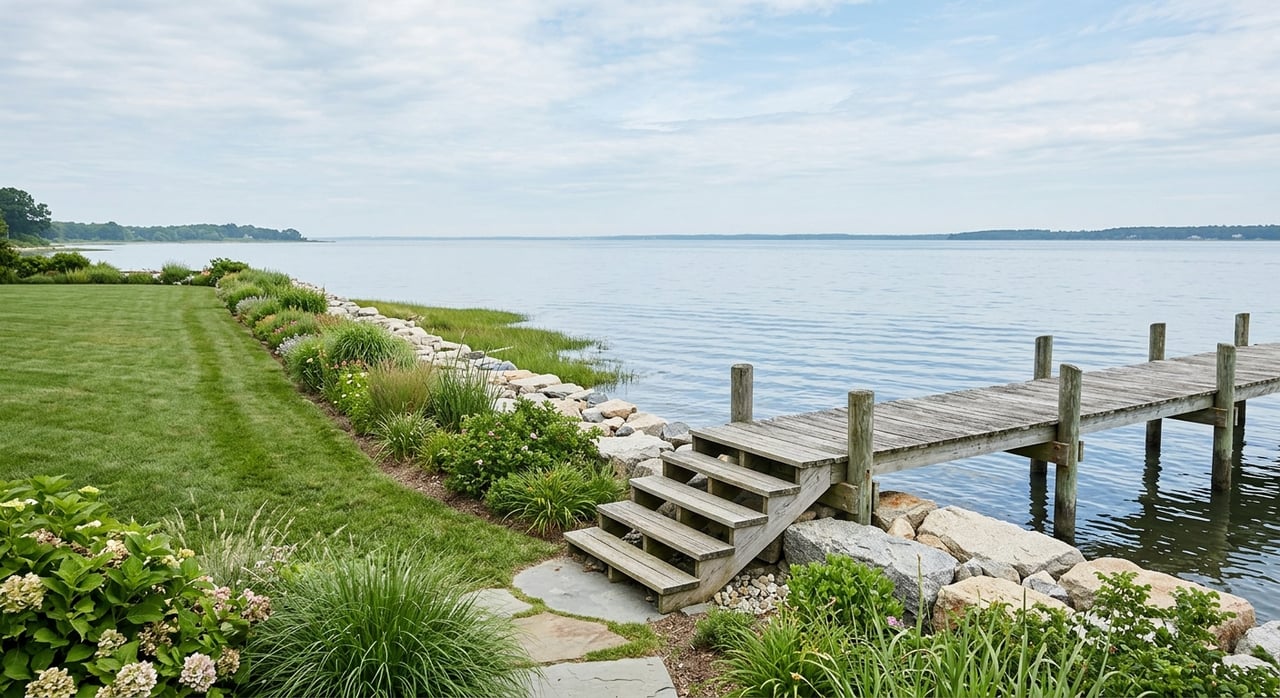
Chance Hope Farm is a waterfront community near St. Michaels in Talbot County, centered around New Post Road and the Miles River. Public references describe it as a former farmland development with elevated waterfront sites and wide river views.
This is not a simple beach-style waterfront setting. The Miles River connects to Eastern Bay and the Chesapeake Bay system, which means buyers are often looking at a river-and-tributary environment with boating access, varied shorelines, and parcel-specific conditions.
One of the biggest things to know about Chance Hope Farm is that not every lot offers the same waterfront experience. Recent listings show properties on the Miles River and also on Solitude Creek, which means exposure, protection, and water conditions can vary within the same neighborhood.
That matters because a calm, protected shoreline can feel very different from a more open stretch of water. Before you fall in love with one property, make sure you understand that parcel’s exact location, frontage, and water access details.
Recent market examples show a pattern of elevated lots with riprapped shorelines and private dock potential. Some listings mention around 200 feet of waterfront, while others note 264 feet or even 350 feet of protected frontage.
Minimum low water depth also varies. Some recent properties were noted at about 3 feet of MLW, while others showed about 4 feet. That difference may affect how you plan to use the property, especially if you want a boat, a lift, or future pier improvements.
Several Chance Hope Farm properties have heavy-duty riprap or riprapped shorelines. That can be a valuable form of shoreline protection, but it does not mean every future change will be simple.
In Maryland, changing the bank or adding structural shoreline protection is regulated. The Maryland Department of the Environment says living shorelines are the preferred method where feasible, while structural stabilization may require a waiver based on site conditions such as erosion, depth, narrowness, soft substrate, or wave energy.
Waterfront purchases often come with more moving parts than inland homes. In Chance Hope Farm, that can include flood-zone review, shoreline protection, dock permitting, septic capacity, and Critical Area limits.
That is why two properties with similar views and similar price points may offer very different long-term value. The details in the file matter just as much as the setting.
A current survey helps confirm lot lines, waterfront frontage, and the location of improvements. This is especially important if you are evaluating space for a dock, future construction, or buffer restrictions.
It also gives you a clearer picture of what you are really buying. On a waterfront parcel, assumptions can get expensive fast.
Talbot County directs buyers to use its interactive map with the FEMA Flood Zones 2016 layer. High-risk flood zones begin with A or V.
If a property is in a Special Flood Hazard Area and the mortgage is federally backed, flood insurance is required. You should also ask whether an elevation certificate exists and whether it may transfer with the sale.
Talbot County says the Chesapeake Bay Critical Area includes all land within 1,000 feet of tidal waters and tributaries. The Critical Area Buffer is at least 100 feet next to tidal waters, tidal wetlands, and tributary streams, and new development is generally not permitted in that buffer.
For buyers, this can affect where you may be able to build, expand, clear, or improve the property. A large lot does not always mean full freedom to use every part of it the way you want.
Chance Hope Farm includes estate-sized parcels, and some recent listings mention approved sewage disposal areas or septic details. That is helpful, but you should never assume one parcel’s setup applies to another.
Talbot County Health requires permits for onsite sewage disposal systems, wet-season soil and site evaluations for perc suitability, and building-permit review that considers both wells and septic. If you are buying land or a home with future expansion plans, these details should be checked early.
If a listing mentions an approved four-bedroom sewage disposal area, verify that paperwork directly. Bedroom count, future additions, and replacement area questions all matter on waterfront property.
You want to know what is permitted today, not what was once discussed informally. Official records are what count.
New wells in Talbot County require a permit, a completion report, and a certificate of potability. For ongoing care, Maryland advises annual sampling of private well water through a state-certified lab.
If the home relies on a private well, ask for the available records and recent testing history. That gives you a better sense of both compliance and maintenance.
A big reason many buyers shop in Chance Hope Farm is the possibility of private water access. But a dockable lot is not the same thing as a fully permitted pier, and future improvements are not automatic.
Maryland requires an application for building, fixing, or changing a pier. Residential piers cannot cross property lines, local agencies control setbacks, and certain work in tidal wetlands must be done by the owner or a licensed marine contractor.
If dock access matters to you, ask for the exact facts on that parcel, including:
This is one of the best ways to avoid buying based on assumptions. In a community like this, the details can vary from lot to lot.
Recent market examples suggest that Chance Hope Farm tends to have larger parcels, often around 2 to 3 or more acres. Listings have also reported annual HOA fees in the hundreds.
That said, you should treat each property as its own case. Verify the legal lot area, HOA rules, septic capacity, riparian rights, and any use restrictions for the exact parcel you are considering.
Some waterfront communities feel highly standardized. Chance Hope Farm appears more parcel-specific.
That can be a good thing if you want variety, privacy, and unique waterfront features. It also means careful review is essential before you commit.
If you are serious about buying here, focus on the records that reduce surprises. The most useful file set for a Chance Hope Farm purchase often includes:
This paperwork helps you separate a beautiful listing from a practical purchase. On the Eastern Shore, that difference matters.
Buying waterfront property is rarely just about the house. You are also evaluating shoreline conditions, permitting history, utility systems, and future use options.
That is where local knowledge can make the process smoother. When you are comparing waterfront properties near St. Michaels, it helps to work with someone who understands the local market, the questions to ask, and the professionals who may need to weigh in during due diligence.
If you are considering Chance Hope Farm or other waterfront opportunities on Maryland’s Eastern Shore, Eddie Matthews can help you evaluate the details with a steady, practical approach.

Whether you’re buying your first home, selling a trust property, or navigating a probate sale, my goal is always the same: to provide honest guidance, strong advocacy, and a smooth experience from beginning to end. Real estate is about people, not just properties. I would be honored to help you take your next step.