The Golf Course Built Martingham. The Water Runs It Now.
September 10, 2026
September 10, 2026
Walk down to the Hambleton Cove pier on a September evening and you will find the actual center of Martingham. Beyond the clubhouse and first tee is a dock with twenty-one slips, a kayak launch, and a handful of neighbors checking a phone before deciding whether the kids can swim before dinner. That small ritual, glancing at a water quality post before letting anyone off the dock, is one glimpse of daily life in the neighborhood.
Martingham was built around golf. It was designed by golf. But the course that shaped its lot lines is no longer the thing most residents use, and understanding why changes how you should think about daily life here.
The land under Martingham has a strange golf history. Pete Dye and his brother Roy started working the site in the 1960s, then walked away unpaid when the original development deal fell through. The course got built anyway, first as Martingham Country Club, later as Harbourtowne Resort Country Club, without their design finished. Dye came back decades later, in 2015, with his wife Alice and son P.B., and turned the old Harbourtowne layout into what opened in 2018 as the Links at Perry Cabin, complete with a replica of his TPC Sawgrass island green on hole 17, a hole regulars call the "Dye-abolical."
The course still threads through the community. Widgeon Place, one of Martingham's residential clusters, sits between the 12th and 13th fairways, close enough that the course shapes the view from the back windows. The Links at Perry Cabin operates as a private club tied to the Inn at Perry Cabin resort, with access built around overnight guests and outside golf-association members rather than a standing resident tee sheet. The course that gave the neighborhood its identity still provides a good chunk of its scenery, while the waterfront offers another place for residents to gather.
Hambleton Cove is one place where that waterfront role comes into view.
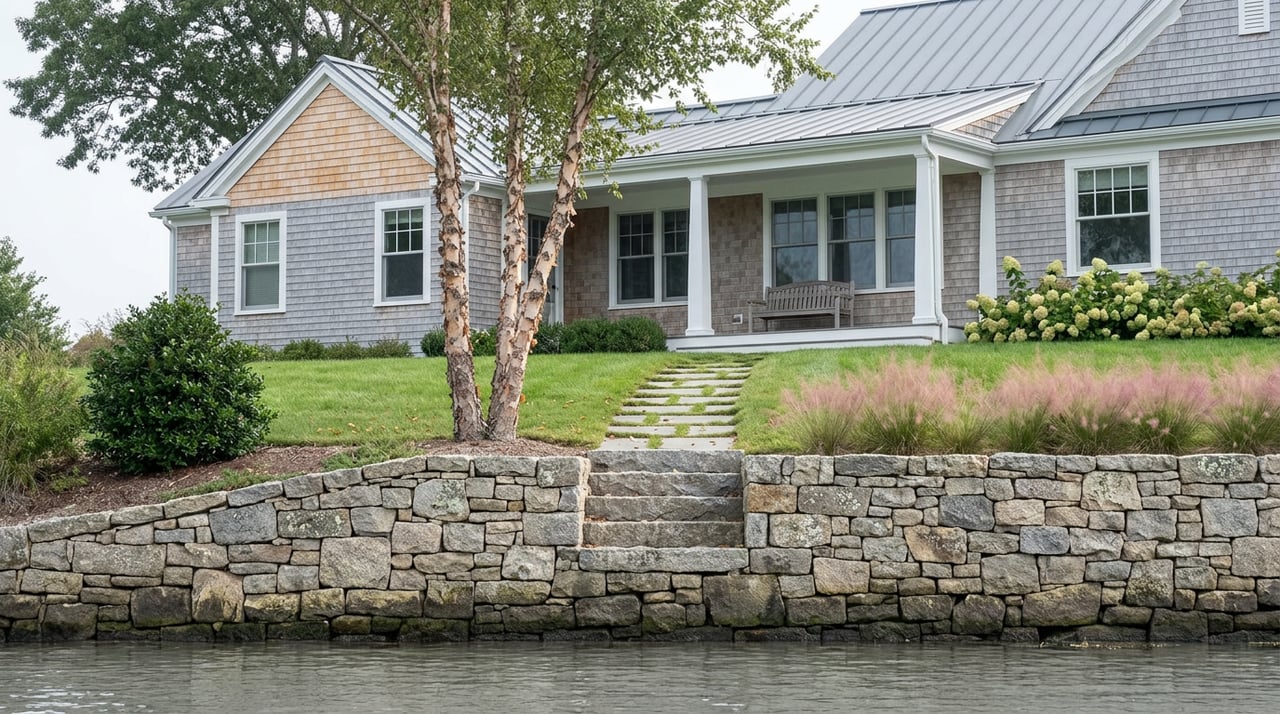
Alongside the golf course, the water is another part of daily life. Hambleton Cove sits along a creek of the same name that feeds into the Miles River, and the cluster there includes 28 townhomes built around a pier with 21 boat slips and a dedicated kayak launch. That dock is one place where neighbors can gather. It is where people put a boat in the water, where kids learn to paddle, where a Saturday morning starts before anyone has decided what else the day holds.
The neighborhood's Community Park adds the second half of that equation, open ground along the Miles River set aside for picnics and the kind of unstructured outdoor time that does not require a membership card. Between the park and the cove, Martingham has a small waterfront commons alongside the golf course that runs through the property.
For anyone using the pier, a seasonal calendar is also set by a nonprofit based up the road in Easton.
ShoreRivers runs two programs that quietly structure how residents use their own waterfront:
Together, these programs shape how residents use the waterfront between May and November, adding a river-based rhythm to life in Martingham.
Another part of Martingham's waterfront life unfolds from June through September. Log canoe racing on the Miles River is a nineteenth-century Chesapeake tradition that survives almost nowhere else, wooden hulls built from hollowed tree trunks, still racing competitively on the same stretch of water Martingham sits beside. You do not need a boat or a ticket to watch it. A shoreline view and a summer evening are enough.
That is a genuine local attraction, and it is one more example of entertainment available on the water.
Martingham's entrance sits about a mile from downtown St. Michaels, and that mile earns its keep specifically on Thursdays. Fifteen of the town's restaurants now run a coordinated Thursday night program, prix fixe menus and chef-driven tastings across the board, effectively making Thursday the town's busiest dining night rather than Friday or Saturday. Pair that with the Saturday farmers market that runs April through November and Concerts in the Park on Thursday evenings through the summer, and the mile between Martingham and downtown starts to look less like a commute and more like a second living room.
Those options add another dimension to life near Martingham, and knowing which night of the week the town gathers can help you build your own week around it.
The name Martingham still says golf course community, and the course still frames the views from Widgeon Place and the other clusters closest to the fairways. But daily life here draws on more than the golf course: the Hambleton Cove pier, a nonprofit's weekly water quality post, a pumpout boat schedule, a summer of log canoe racing visible from the shoreline, and a Thursday night a mile down the road. The golf course helped shape this place, while the water and nearby town add other parts of its appeal.
If you already live in Martingham, none of this probably surprises you day to day, it is just the rhythm you are already keeping. But it is worth naming, because it helps explain the neighborhood's mix of water access, golf, and nearby-town amenities.
If you are thinking about what a place like Martingham offers beyond its golf and waterfront, or you are weighing a move somewhere else on the Eastern Shore with a similar mix of water access and small-town pull, Eddie Matthews has spent more than two decades working these communities from the ground up. Let's Connect.


Whether you’re buying your first home, selling a trust property, or navigating a probate sale, my goal is always the same: to provide honest guidance, strong advocacy, and a smooth experience from beginning to end. Real estate is about people, not just properties. I would be honored to help you take your next step.