Chance Hope Farm HOA Fees and Shoreline Costs
September 24, 2026
September 24, 2026
A buyer comparing waterfront listings around St. Michaels will eventually run into a number that looks like a discount: a $650 annual HOA fee on a Chance Hope Farm lot, sitting next to communities where dues run into the thousands. The instinct is to read that gap as savings. It isn't. It's a description of what the association does and does not own.
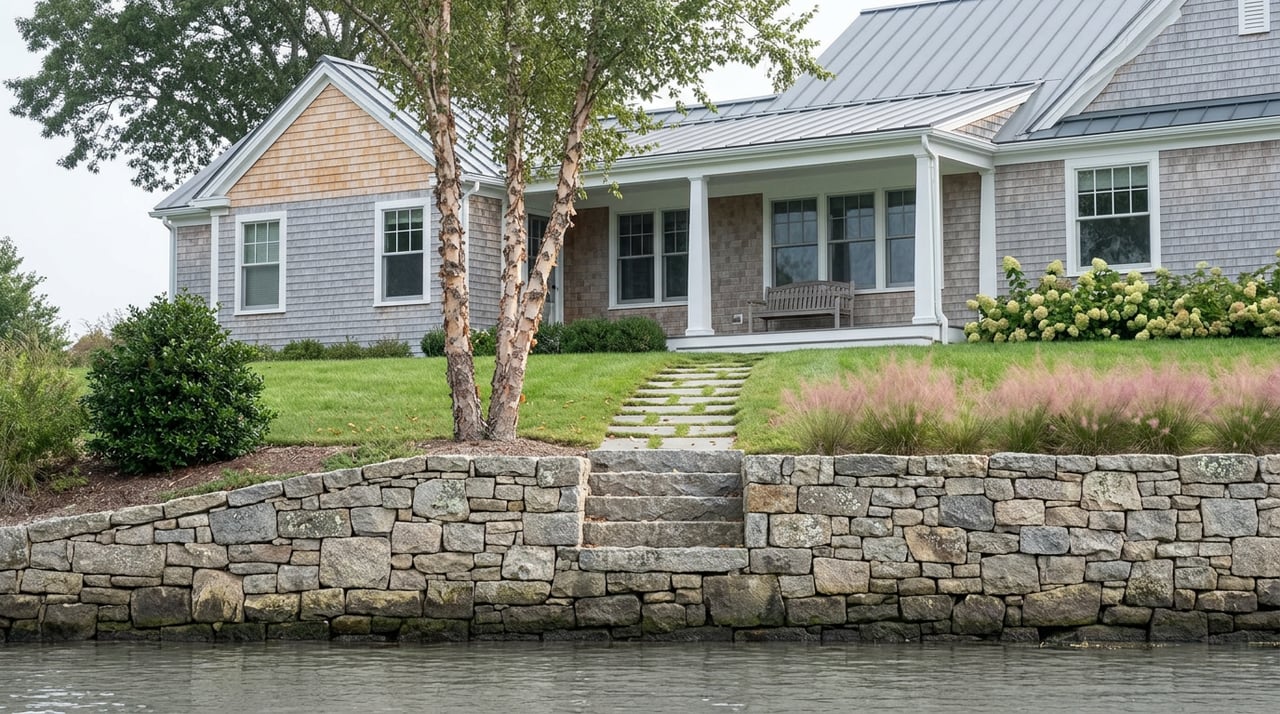
Chance Hope Farm is a small enclave of roughly fifty waterfront homes reached by turning off Maryland Route 33 onto Deep Water Point Road, then left onto New Post Road, about two and a half miles outside historic St. Michaels. The lots run large, typically two or more acres, and many carry direct frontage on the Miles River with shorelines already stabilized in riprap. That frontage is the whole draw. It's also the reason the fee stays low: the water isn't a shared asset the association maintains. It's fifty separate deeds, each responsible for its own piece of river.
A 2.25-acre building lot on New Post Road came to market with about 200 feet of Miles River frontage, a riprapped shoreline already in place, and an asking price of $1,250,000. The listing disclosed the HOA fee directly: $650 a year. For comparison, homes on the same road have traded in a range from roughly $1,499,000 to $1,695,000 on similarly sized 2.24-acre parcels.
Six hundred fifty dollars a year covers what a small, road-based association typically covers: private road upkeep, covenant enforcement, maybe a shared entrance sign. It does not fund a clubhouse, a marina, a community pool, or a shared park. There isn't one to fund. Compare that to Martingham, a few miles away on the same river, where the property owners association maintains a Community Park with river views as shared community land and the Links at Perry Cabin golf course threads through the neighborhood as part of its built environment. Martingham's association exists partly to manage shared infrastructure. Chance Hope Farm's association exists mainly to manage the road.
Neither structure is better. They're different products wearing the same label, "waterfront community," and the fee is the tell.
| Chance Hope Farm | Martingham | |
|---|---|---|
| Approximate HOA fee | $650/year (as disclosed on a 2025 lot listing) | Managed by an active POA with governing documents and committees |
| What's shared | Private roads, covenants | Community Park on the Miles River, golf course frontage, POA-run programming |
| Who maintains the shoreline | Individual lot owner | Association-managed common areas plus individually owned waterfront lots |
| Typical lot size | 2+ acres | Varies, single-family and condo clusters |
The table isn't a verdict on which community costs more to own. It's a reminder that a fee number means nothing until you know what it's a fee for. A $650 due in Chance Hope Farm and a much larger due somewhere else aren't the same kind of number just because they're both labeled "HOA fee." One is a road maintenance charge. The other might be buying you a golf course, a park, or a dock system that a homeowner would otherwise have to build and maintain alone.
If the association isn't paying for shoreline work, the owner is. On a property with 200 feet of river frontage and riprap already installed, that's a sunk cost baked into the price you're paying today. But riprap doesn't last forever, and a new dock, a shoreline repair after a storm, or a permit application to modify existing structures becomes a private project with a private invoice. There's no association reserve fund to tap and no board to petition for help splitting the cost.
This is the part of the Chance Hope Farm math that a low fee obscures. A buyer used to golf-course or marina communities, where a chunk of the annual dues quietly funds a capital reserve for exactly this kind of work, can misread a small HOA number as a smaller total cost of ownership. It might not be. It's a different allocation of the same category of expense, moved from a shared line item to an individual one.
Before writing an offer on a Chance Hope Farm lot, it's worth asking a short list of questions that don't show up on the listing sheet:
None of these questions are unusual for waterfront property anywhere on the Eastern Shore. They matter more in a community where the association isn't the one holding the answers.
The HOA fee is also the smallest number in the ownership math, and it's easy to let it stand in for the whole picture. One home on New Post Road carries a county tax assessment of $1,579,967 and an annual county tax bill of $13,042, based on the most recent public assessment. That figure has nothing to do with the homeowners association. It's Talbot County's valuation of the property, and it moves independently of whatever the HOA charges. A buyer comparing two communities on HOA fee alone, without lining up the assessed values and tax bills behind them, is comparing the wrong number.
None of this makes Chance Hope Farm a harder place to own property. It's one of the quieter corners of the St. Michaels waterfront, with large lots, direct river access, and none of the shared-amenity traffic that comes with a golf course or a marina running through the middle of the neighborhood. That quiet is the product. The low fee is simply what it costs to buy privacy instead of programming, and the tradeoff only makes sense once a buyer knows exactly what they're trading.
Does a lower HOA fee mean lower total cost of ownership? Not necessarily. It usually means fewer shared expenses, which shifts costs like shoreline maintenance, dock repair, or private road resurfacing onto the individual owner instead of spreading them across the community. The total may end up similar. It's just organized differently.
Is Chance Hope Farm frontage riparian or deeded to a fixed point? This varies by lot and should be confirmed through a title search and current survey rather than assumed from the listing description. Waterfront boundaries on the Miles River can shift with erosion and shoreline work over time.
How does Chance Hope Farm compare to Martingham for someone who wants golf or a clubhouse? It doesn't offer either. Chance Hope Farm has no shared recreational amenities. A buyer who wants golf access, a community park, or organized programming will find that closer to home in Martingham, where the property owners association manages shared land and the Links at Perry Cabin golf course runs through the neighborhood itself.
If you're weighing a waterfront lot against a golf-community listing on the Eastern Shore and the fee structures don't seem to line up, that's usually the most useful signal in the whole comparison, not the least. Eddie Matthews has spent more than two decades walking Talbot County buyers through exactly this kind of fine print before they write an offer. Let's Connect.
This article is general information, not legal, tax or financial advice. Consult a qualified professional about your situation.


Whether you’re buying your first home, selling a trust property, or navigating a probate sale, my goal is always the same: to provide honest guidance, strong advocacy, and a smooth experience from beginning to end. Real estate is about people, not just properties. I would be honored to help you take your next step.